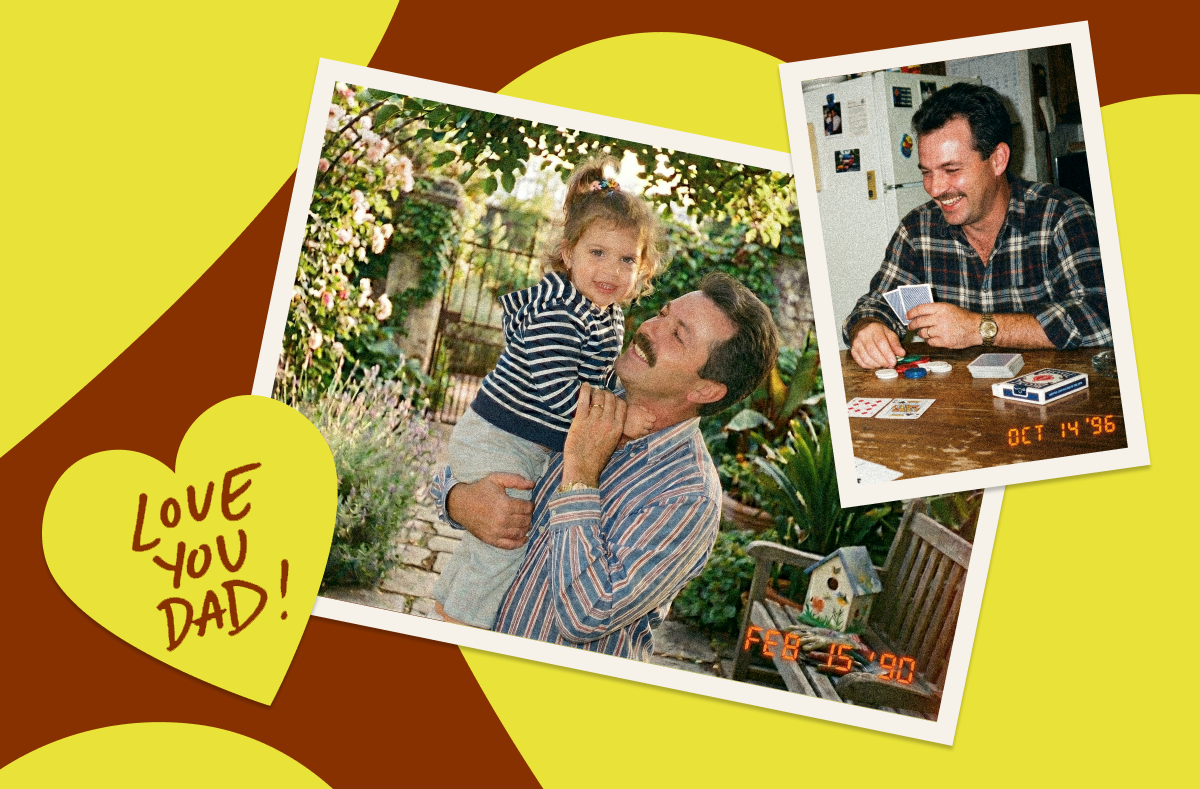
Every Friday evening, Nicole’s father drove to his neighborhood poker league and played for a couple of hours. It was his end-of-week ritual, a way to decompress. Her brothers also knew how to play. When the family gathered for Thanksgiving or Easter, a card game would inevitably break out, and the men would settle in.
Nicole never thought to ask to join. And nobody thought to invite her.
This Father's Day, she's thinking about the games she watched growing up — and the one she's finally learning to play.
Growing Up in the Orbit of the Game
Her father's relationship with cards runs deep. His family settled in Kansas generations ago, and gameplay was how they spent their time — in barns, across kitchen tables, the thrill of a good hand keeping everyone together across generations. Yet, her mother never learned poker. Neither did Nicole.
She grew up in the orbit of it without quite registering what she was circling. It wasn't until she started learning the game herself — years later, as an adult — that everything clicked.
"I've been around poker my entire life and I had never learned the game. I barely knew the hand rankings — and only because of another card game I already played."
When she brought it up with her father, his response was genuine: I mean, it's just something that everyone learns in their own time. He hadn't thought to teach her. It simply hadn't occurred to him. And Nicole, for her part, had never felt that something was missing — until she did.
"There was an assumed lack of interest," she says. "It wasn't like I was explicitly left out. It just never came up."
But it had come up for her brothers, both of whom knew how to play and had learned through their own social circles. There were always poker chips in the house, and the neighborhood league her father played in was actually started by a woman, a longtime family friend who'd built a thriving co-ed game. So in some sense, the table had always been open to her.
This Father's Day, there’s a question she keeps returning to: how many things have the people who raised us carried — skills, instincts, strategies — but never passed down simply because no one thought to make the ask explicit?
And what does it mean to finally decide you're going to learn them anyway?
The Low-Pressure Environment That Taught Her How to Play Poker
When Nicole decided to learn poker, she went about it the way she approaches most things: on her own terms.
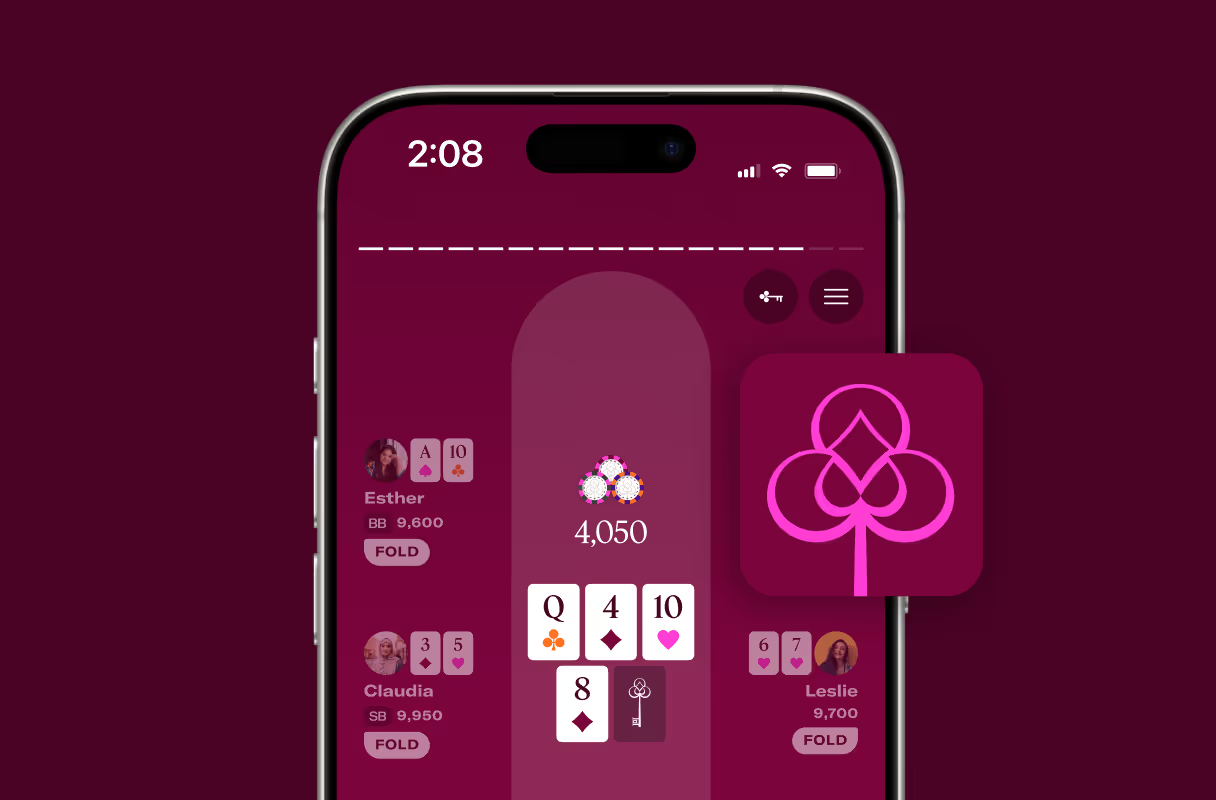
She started on the Poker Power app, drawn in partly because it gave her room to actually think. Traditional poker apps worked against her: "They were so fast-paced. So many popups, noises, prizes to win, buckets to fulfill, different goals to accomplish per day, month, week, streak, cycles — all of that was really overwhelming, because I'm just not that type of gamer. I'm somebody who wants to sit down and learn at my own pace."
The Poker Power app gave her something different. She'd open it in the evenings while watching a show — what she calls the "double screen" experience — practicing in community games with enough breathing room to study what was actually happening on the table.
"I learned how to analyze other people's moves — that was my primary goal. I could understand the game I was playing, but I didn't understand how to read other people's games. The table moves at a fast pace. I knew a person made a move for a certain reason, and I just needed a few extra moments to understand the why."
She'd make a questionable move on purpose just to watch how it played out. She'd observe others fold hands she would have held. Small experiments in strategy and risk, hand by hand, evening by evening.
One of the things that made all of this possible is Poker Power keeps it entirely free to play. No money ever changes hands. This matters, because there's a persistent myth that poker is primarily about financial risk — that to play is to wager, and to wager is to lose. "I think there's a huge misconception around poker — that it's only for people who are willing to risk it all. And it doesn't have to be that way."
What she found when she sat down to learn was a mind sport, one that had very little to do with what she'd imagined.
The Possibilities Unlocked by Taking Risks
Learning poker deepened into something Nicole hadn't quite anticipated: a steady process of self-discovery.
She'd always been a risk-taker. She moved to Arizona for college. Relocated again for work. Spent three and a half years in a long-distance relationship. Picked up and moved to Austin on instinct. When a close friend told her recently, "You always know what you want. You've always been this way — you know what's right, what's wrong, you're decisive," Nicole was genuinely taken aback.
"I never associated that with actually being a risk taker or being decisive," she says. "I think I'd always taken risks and I never specifically thought that was strategic. Looking back, it was — because those decisions were always thought through."
Poker gave her a framework for something she'd already been building. And it clarified something she now considers one of the most useful distinctions she knows: the difference between a good decision and a good outcome.
“What should’ve been a winning hand and a smart play can quickly turn into a loss. Poker teaches you that you can do everything right and still walk away empty-handed. But you're not really losing, because you're learning. That's the separator. Every hand teaches you something — about the game, about the people you're playing with, and about yourself. The more you understand the behavior of the people around you, the better your decisions become over time."
This is what she wishes she'd understood earlier. Her brothers were accumulating these exact lessons with their friends, her Father in his end-of-week ritual — in the low-stakes, high-frequency repetitions that compound into genuine judgment. Nicole was building the same instincts in every move she made across her life. She just didn't hadn't named it.
"I think if I had learned poker really young — seeing how much confidence it builds within women and girls in general — it could have benefited me a lot. I don't think I gained that confidence until much later."
And there's something specific about poker that makes it the right table for this kind of growth. "Poker isn't physical in the way other competitive activities I did with my brothers were," she says. "It's a mind sport — and it's an even playing field. My wits and my smarts against theirs."
What She'd Say to Her Dad This Father's Day
Nicole describes her relationship with her father in the warmest possible terms. He's “the best,” she says — and she means it without reservation. There are no missing lessons to account for, no distance to close. He came from a tradition where the game was simply absorbed, passed along without ceremony because that's how it had always worked.
She hasn't played with him yet — but she's looking forward to sharing all she’s learned during her next visit. She's also planning to add a Poker Power Signature Case to the existing collection of chips at her parent’s home, with the goal of teaching her mother, too.
If she had a message for her dad this Father's Day, it isn't a correction. It's more of an introduction.
Your daughter has just as thick a skin as any of the boys at that table — probably thicker. She found her way to the game on her own terms. And she can't wait to show you how she plays.
Download the app and deal yourself in, too.

FREE DOWNLOAD
Read Our Confidence Guide
By proceeding you consent to receive marketing communications (such as newsletters, blog posts, webinars, event invitations, and new product updates), and targeted advertising from Poker Power from time to time. You can unsubscribe from our marketing emails at any time by clicking on the "Unsubscribe" link at the bottom of our emails. For more information on how we process your personal information and what rights you have in this respect, please see our Privacy Policy and Terms of Service.
.webp)