.webp)
Key Takeaways:
- Ghosting your bank account is a massive tactical leak in your financial game.
- Treat your balance as actionable data, not a personal failure.
- The strategic check lets you gather information without the emotional overwhelm.
- Mute the emotional static by separating your net worth from your self-worth.
The most costly relationship you’ll ever manage is the one with your bank account. Wincing every time you glance at your account balance is more than stressful. You’re essentially playing a high-stakes hand without even looking at your cards.
So why the blind eye? Many of us get trapped in a perfectionist loop, mistakenly worrying that being a little low in our chip stack is a reflection of our character or potential. In fact, a recent study by Wealth Enhancement and Wakefield Research reveals that 44% of adults have intentionally steered clear of their financial accounts over the last twelve months because of anxiety or dread, a trend that hits Gen Z the hardest.
It’s time to reframe your statements as a simple snapshot of the board. Here’s how to mute the emotional static and make your move with actionable intel.
Assessing the Board: The Strategic Check
Some people misunderstand a check in poker as a sign of weakness or a move to hide. But a strategic check allows you to stay in the hand, gather more information, and see the next card without throwing more chips into a pot you don't fully understand yet.
Establishing a standing 'Board Review' is your version of a strategic check. You aren't logging in to solve your entire financial existence in one sitting. You’re gathering intel to eliminate the unknown, to see what’s happening — the subscriptions, the hidden fees, the coffee habits — before you decide your next big move.
When you don't know your numbers, your brain fills the gaps with worst-case scenarios. By briefly looking at your balances on a regular basis, you’re training your brain to see these figures as tactical puzzles, not personal failures.
Practice Practicality Over Perfectionism
Ghosting is often a perfectionist tell, a belief that if the numbers aren’t ideal, it's a character flaw. In reality, they’re just data, not a reflection of your worth.
To stop the cycle, you have to lower the stakes. These low-impact maneuvers give you a jumping off point:
- The Five-Minute Sprint: Set a timer on your phone. You can handle anything for 300 seconds. Log in, look at the balance, and log out before the timer dings.
- The Avoidance Audit: Pick one thing you’ve been ignoring, like your credit score or an IRS notice. Look at it. Don't act yet. Just acknowledge it exists.
- Automatic Nudges: Set a weekly notification that reminds you to log in and look at your numbers. It turns a scary event into a routine administrative task.
- Strategic Emotional Intelligence: Shame is the fastest way to lose a hand. If you see a number you don't like, treat it like a bad flop. It’s just data. It’s not a reflection of you.
- Behavior Tracking: Use a Notes app to jot down how you feel after you check. You might realize the dread was worse than the actual numbers.
Anchoring Your Wins
Instead of looking at your bank account to see what you can’t do, look at it to see how close you are to your next big play. Frame your financial data around your goals. Maybe that’s becoming your own boss, starting your investment journey, or the competitive advantage that comes with zero debt.
When you anchor your actions to a tangible payoff, the act of checking your balance becomes an invitation to grow. You're no longer a spectator of your own life; you're the one dealing the cards.
Ending the Haunt: Why Showing Up Is the Real Win
Confidence is a multiplier, and it’s earned through the discipline of showing up. By simply logging in, you've already won the hardest part of the game: moving from passive avoidance to active observation.
You don't need a massive windfall to start feeling like a pro. You just need to be willing to look at the cards you were dealt.
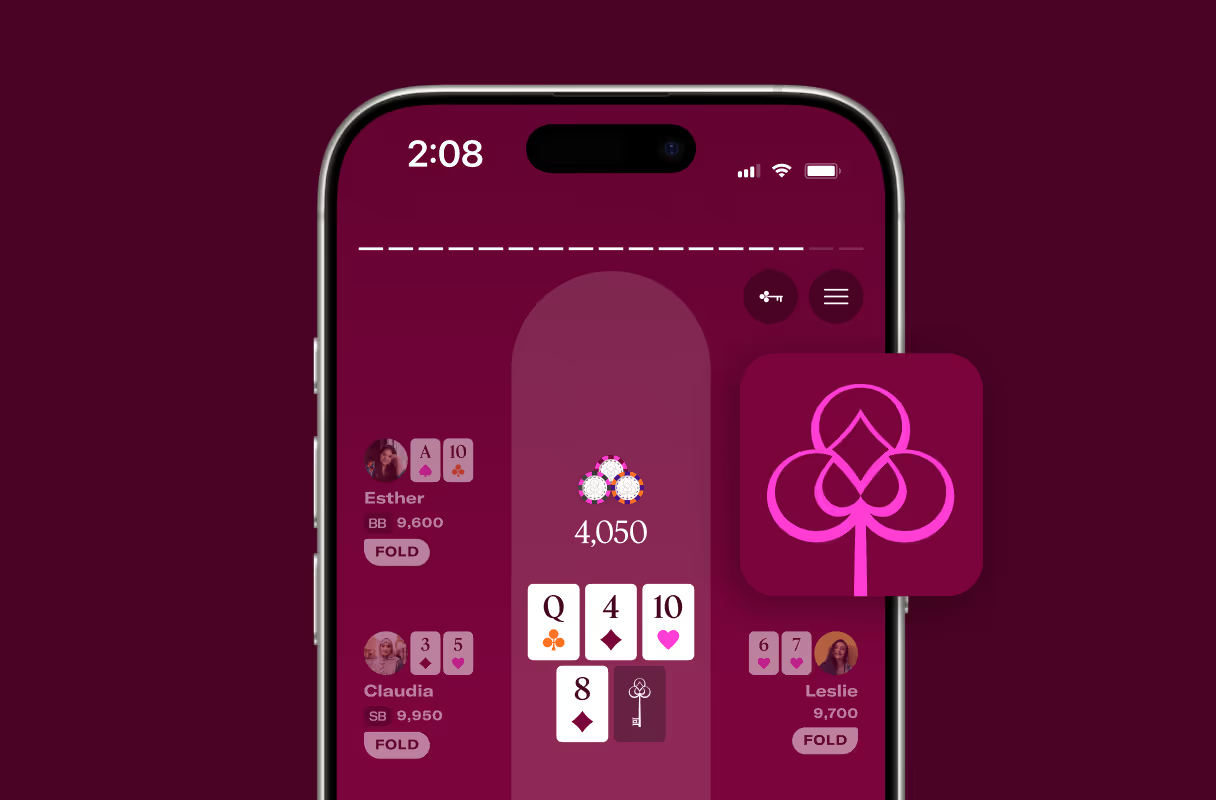
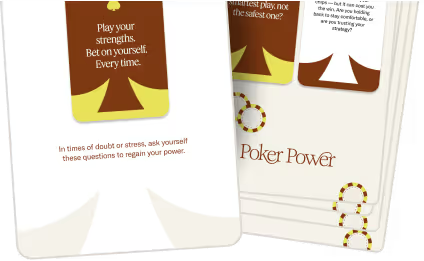
Make a strategic plan for your finances. Download the 2026 Board Review to replace dread with data.

FREE DOWNLOAD
Read Our Confidence Guide
By proceeding you consent to receive marketing communications (such as newsletters, blog posts, webinars, event invitations, and new product updates), and targeted advertising from Poker Power from time to time. You can unsubscribe from our marketing emails at any time by clicking on the "Unsubscribe" link at the bottom of our emails. For more information on how we process your personal information and what rights you have in this respect, please see our Privacy Policy and Terms of Service.